The Most Expensive Document on a Small Job Site Is the Daily Report
By Normunds Krastins, Founder & CEO, AgiloBee | | 7 min read
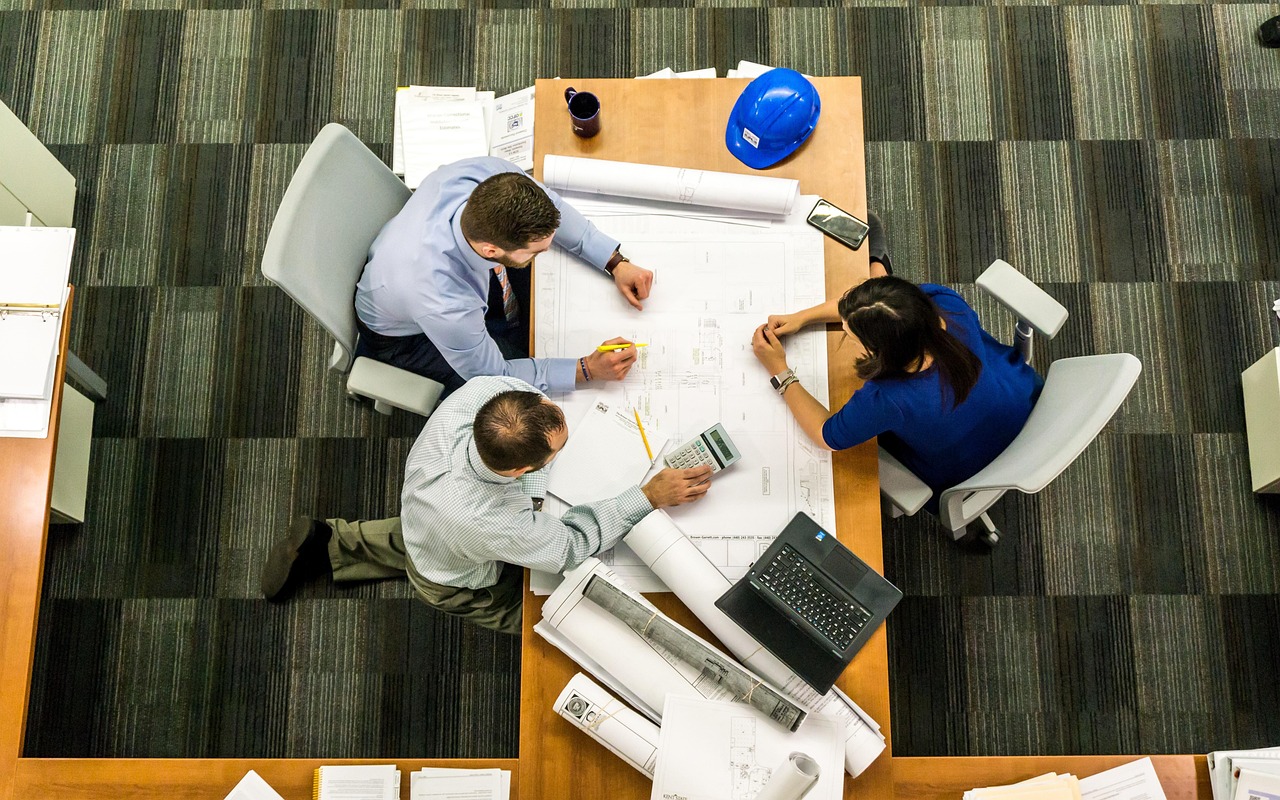
It is Sunday evening. A small construction business owner sits at the kitchen table with a phone full of WhatsApp messages, two paper timesheets that came back a little damp, and a voice note from a foreman that is half in Polish. The goal is simple: figure out what actually happened on three sites last week, who worked where, and what still needs to be ordered before Monday.
Nobody budgets for this hour. But it happens every week, in thousands of small companies, and it is quietly one of the most expensive habits in the trades.
This article looks at what the research says about the cost of bad site information, why multilingual crews make the problem worse, and what a better model looks like.
How much time do construction teams lose to missing information?
More than most owners would guess. In the 2018 Construction Disconnected study, FMI and PlanGrid (now part of Autodesk) surveyed nearly 600 construction leaders. Respondents reported spending about 35% of their working time, more than 14 hours a week, on what the study called non-optimal activities: hunting for project information, resolving conflicts, and dealing with mistakes and rework. About five and a half of those hours went to simply looking for data. [1]
The same research found that poor project data and miscommunication were behind 48% of all rework on US jobsites. [1]
A larger follow-up study by Autodesk and FMI in 2021 surveyed more than 3,900 professionals worldwide. Thirty percent said more than half of their project data was "bad" in some way: inaccurate, incomplete, outdated or inaccessible. The researchers estimated that decisions based on bad data cost the global industry around 88.7 billion US dollars in rework in 2020 alone. [2]
These figures come mostly from larger companies and projects. For a crew of eight people, the numbers are smaller, but the pattern is the same. When information arrives late, secondhand, or not at all, someone pays for it in hours, in rework, or in a missed delivery.
Why is so much of construction still run on paper?
Because it always has been, and because most software was not built for people who work with their hands.
The McKinsey Global Institute ranked construction among the least digitized sectors in the world, and in Europe it came in last on its industry digitization index. Over two decades, global labor productivity in construction grew by only about 1% a year, compared with 2.8% for the wider economy. [3]
McKinsey also pointed to a very specific culprit: the industry still relies heavily on paper for things like equipment logs and daily progress reports. When information moves that slowly, owners and contractors often end up working from different versions of reality. [4]
That phrase describes the Sunday evening kitchen table exactly. The owner has one version, the foreman has another, and the crew has a third.
The language problem nobody puts in the budget
There is a second layer that gets far less attention: the people doing the work often do not share a first language with the people reading the report.
Take Poland, one of the largest construction markets in Central Europe. According to Statistics Poland (GUS), 1.14 million foreigners were working in the country by the end of 2025, making up almost 7% of all workers. Ukrainians accounted for about two thirds of them. [5] Construction has long been one of the sectors that relies most on foreign labor: back in 2022, foreigners already made up about 11.7% of people working in the Polish construction section. [6]
Latvia, Lithuania and many other European markets tell a similar story on a smaller scale. A typical small crew today can easily include three languages.
Research on multilingual construction sites keeps finding the same thing. A frequently cited Australian study by Trajkovski and Loosemore reported that nearly half of the foreign workers surveyed could not fully understand the instructions they were given. [7] A UK research project observing multilingual sites found that migrant workers regularly end up acting as informal, unpaid interpreters for their colleagues, and that miscommunication caused by language barriers sometimes had serious safety consequences. [8]
Now apply this to the daily report. If a worker has to describe their day in the owner's language, one of three things usually happens:
- They write very little, because writing in a second language is slow and uncomfortable.
- Someone else writes it for them, and details get lost in the retelling.
- Nobody writes it at all, and the owner reconstructs it later from memory.
In every case, the report stops being a record of what happened. It becomes a guess.
Why "just write better reports" does not work
Most attempts to fix this focus on discipline: a stricter template, a longer form, a reminder at 5 pm. They rarely stick, for two reasons.
First, the report is written after the work, usually by someone tired and in a hurry. Memory fills the gaps, and memory is generous to itself.
Second, the person writing is often not the person who did the work. A foreman summarizing four people's day will flatten it into one line. The small detail that matters, like "we ran out of mortar at 2 pm" or "the north wall frames were never touched," is exactly what disappears.
Better paperwork is still paperwork. The problem is not the quality of the form. It is the moment the information gets captured.
A different model: the report that builds itself while the work happens
The alternative is to stop asking people to describe their day afterward, and instead collect small pieces of information at the moment they naturally occur.
In practice, this looks like:
- Check-in at the point of work. A worker scans a printed QR code at the site when they arrive and when they leave. Who, where and how long are recorded automatically, with no app to install and no timesheet to fill in later.
- A short note in the worker's own language. At the end of the shift, each person writes one or two sentences about what they did, in whatever language they think in. Polish, Ukrainian, Latvian, Russian, English: it does not matter.
- One report in the reader's language. The owner or office receives a single daily summary, translated into their language, with anything that does not match the plan flagged: a missing delivery, a task that was scheduled but not started, a crew waiting on materials.
The key shift is simple. The information is captured by the people who did the work, at the time they did it, in the language they are most precise in. The report is assembled from facts that already exist, not reconstructed from memory.
This is the idea behind AgiloBee, the tool we build for construction, cleaning and landscaping crews. The same principle also drives the custom systems we build for individual businesses. For RADADA, a screen-printing apparel manufacturer in Latvia, staff photograph a supplier's delivery note or paste a client's WhatsApp order, and the system reads it and fills in inventory or invoice fields automatically. Different workflow, same philosophy: the business collects information about itself as a byproduct of the work, instead of asking someone to write it up later.
What to look for in any site reporting tool
Whether you use AgiloBee or something else, these questions will tell you quickly whether a tool will actually get used by a real crew:
- Does it need an app install? Every install is a barrier, especially for temporary or seasonal workers.
- Is information captured at the point of work, or reconstructed later? Look for check-ins tied to a physical location, not a form filled in at home.
- Can workers write in their own language? If the tool forces everyone into one language, you will get shorter, vaguer notes.
- Does it compare what happened with what was planned? A report that only lists activity still leaves you to spot the problems yourself.
- Does pricing punish you for hiring? Per-user pricing can make adding a seasonal worker feel like a cost decision rather than a staffing one.
Frequently asked questions
What is a daily site report?
A daily site report is a short record of what happened on a job site during a shift: who worked, for how long, what was completed, and what problems came up, such as missing materials or delays. Owners and managers use it to plan the next day, order materials, and track progress against the schedule.
How much time do construction teams lose to poor information?
In the FMI and PlanGrid Construction Disconnected survey, construction professionals reported spending about 35% of their time, more than 14 hours a week, on non-optimal activities such as searching for information and dealing with rework. [1]
How do you manage reporting for a crew that speaks different languages?
The most reliable approach is to let each worker record their notes in their own language, then translate everything into one report for the manager. Forcing workers to write in a second language usually produces shorter, less accurate notes.
Are QR codes accurate enough for time tracking?
A QR code fixed at a specific site ties each check-in to a physical location, which makes it harder to record time from somewhere else. It also removes the need to fill in timesheets from memory at the end of the week.
Sources
- Autodesk Construction Blog, Construction Disconnected: The High Cost of Poor Data and Miscommunication (FMI and PlanGrid, 2018). https://www.autodesk.com/blogs/construction/construction-disconnected-fmi-report/
- Autodesk investor news release, Study from Autodesk and FMI Finds Better Data Strategies Could Save the Global Construction Industry $1.85 Trillion (2021). https://investors.autodesk.com/news-releases/news-release-details/study-autodesk-and-fmi-finds-better-data-strategies-could-save
- McKinsey Global Institute, Reinventing construction through a productivity revolution (2017). https://www.mckinsey.com/capabilities/operations/our-insights/reinventing-construction-through-a-productivity-revolution
- McKinsey & Company, Imagining construction's digital future. https://www.mckinsey.com/industries/capital-projects-and-infrastructure/our-insights/imagining-constructions-digital-future
- Notes from Poland, Number of foreign workers in Poland rises 7.2% to 1.14 million (June 2026, reporting Statistics Poland data). https://notesfrompoland.com/2026/06/09/number-of-foreign-workers-in-poland-rises-7-2-to-1-14-million/
- European Research Studies Journal, Labour Shortages and the Role of Foreigners: A Case Study of the Labour Market in Poland. https://ersj.eu/journal/3810/download/Labour+Shortages+and+the+Role+of+Foreigners+A+case+Study+of+the+Labour+Market+in+Poland.pdf
- Trajkovski, S. and Loosemore, M., Safety implications of low-English proficiency among migrant construction site operatives, International Journal of Project Management (2006). https://www.researchgate.net/publication/222532053_Safety_implications_of_low-English_proficiency_among_migrant_construction_site_operatives
- Construction Management, The safety risks of language barriers on site. https://constructionmanagement.co.uk/language-barriers-can-have-devastating-safety-consequences/